



Note: This post contains affiliate links. I only share products I personally use, love, and trust. If you choose to purchase through my link, I may receive a small commission at no extra cost to you.
Your Gut + Brain Are Always in Conversation
We often think of stress, anxiety, and emotional overwhelm as things that live in the mind. However, your gut and brain are constantly in dialogue. Through a complex, intelligent system of nerves, neurotransmitters, and hormones, your gut sends messages to your brain all day long. This connection is known as the gut–brain axis, and it plays a vital role in shaping your mood, energy, clarity, and resilience.
What Is the Gut–Brain Axis?
The gut–brain axis is the communication pathway between your central nervous system (brain and spinal cord) and your enteric nervous system (your “second brain” in the gut). It weaves together neural, hormonal, and immune signals in a two-way flow.
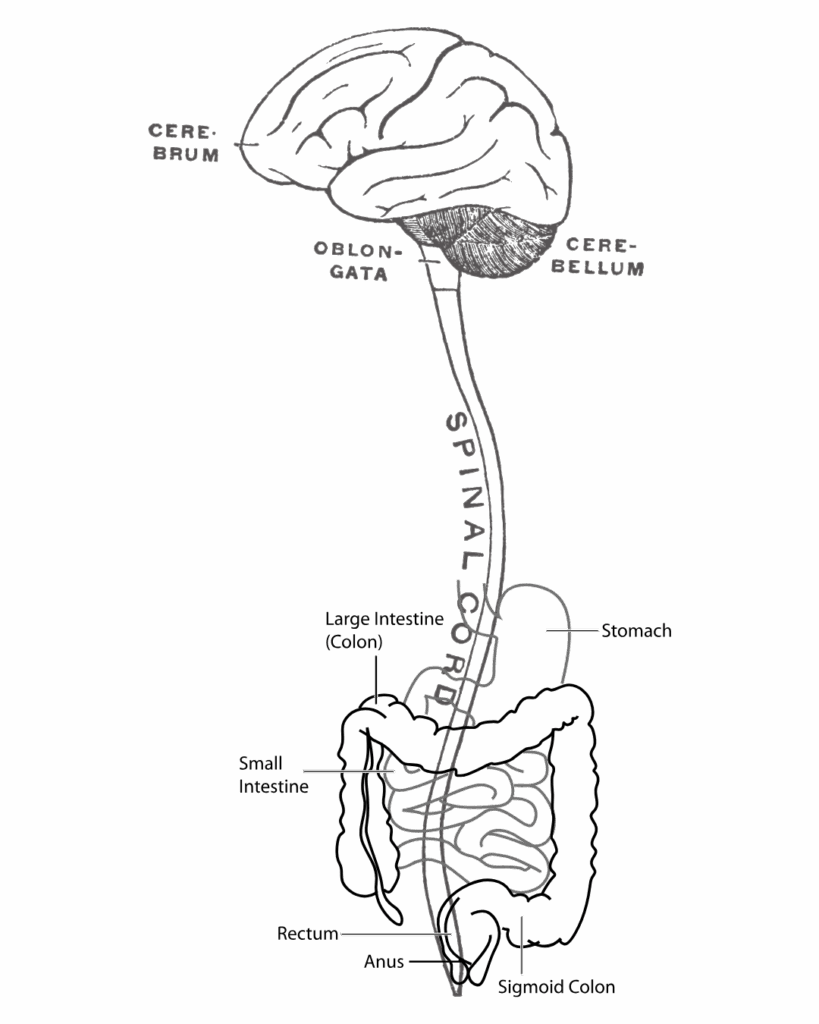
This pathway:
- Regulates digestion and nutrient absorption
- Influences mood, cognition, and emotional regulation
- Helps manage inflammation and immune responses
- Is deeply affected by stress, breath, sleep, and the health of your microbiome
Your gut contains over 500 million neurons and produces around 90% of your body’s serotonin (the “feel-good” neurotransmitter). So gut health isn’t just physical. It deeply influences how we think, feel, and function.
How to Support Your Gut–Brain Axis
Here are four grounded, accessible ways to care for this vital connection. These aren’t quick fixes, they’re small rituals of restoration.

1. Stimulate Your Vagus Nerve
The vagus nerve is like a superhighway connecting your brain to your gut, lungs, heart, and other vital organs. It carries calming signals back and forth and helps regulate digestion, emotional balance, breath, heart rate, inflammation, and even sleep.
When the vagus nerve is stimulated, it releases acetylcholine, a neurotransmitter that tells your gut to contract rhythmically, a process called peristalsis, which moves food along your digestive tract. This also supports a state of rest, repair, and parasympathetic regulation.
One simple way to support your vagus nerve?
Taping the vagus nerve is a gentle technique that may improve sleep, digestion, and calm.
[Watch my video on vagus nerve taping here]
Other ways to support vagal tone:
- Cold exposure (e.g., splash of cold water on face)
- Singing, humming, or chanting
- Gentle neck stretches or cervical mobility
- Slow exhalation and breath-holding practices
A regulated vagus nerve is one of the most direct paths to a steady gut and calm mind.

2. Practice Diaphragmatic Breathing
Your diaphragm is the breathing muscle that also gently massages the digestive organs with every inhale and exhale. Deep, slow breathing into the lower ribs supports:
- Better digestion and motility
- Increased vagal activity
- A shift out of stress mode and into rest-and-digest
Try this:
Place your hands on the sides of your lower ribs. As you breathe in, gently expand your ribs sideways. Keep your shoulders soft and your jaw relaxed. Let the breath be quiet, steady, and slow.
Just a few minutes a day can shift your internal state in big ways.
[Watch my guided diaphragmatic breath video]

3. Eat Mindfully + Create Calm Space for Meals
Digestion begins before you take the first bite. When you eat in a rushed or stressed state, your body is likely in sympathetic (“fight or flight”) mode, which slows digestion, reduces stomach acid, and affects enzyme function.
Simple ways to shift into parasympathetic before meals:
- Take 3 slow breaths before eating
- Put away your phone or distractions
- Eat without rushing, chewing fully
- Create a calm, grounded environment
Your body digests best when it feels safe. Eating mindfully takes practice and presence.
4. Support Your Microbiome with Probiotics
Your gut is home to trillions of microbes that help regulate everything from inflammation to mood.
When your microbiome is balanced, it produces short-chain fatty acids, neurotransmitters, and other signaling molecules that support the gut–brain axis.
That’s where probiotics can be helpful. Certain strains even act as psychobiotics, meaning they may positively influence emotional well-being, especially when paired with lifestyle rhythms that support calm and clarity.
One thing I trust and use every day is Seed’s DS-01® Daily Synbiotic. It’s a 2-in-1 prebiotic and probiotic with 24 clinically studied strains.
Why I love it:
- It’s backed by real science and tested for viability
- It includes strains shown to support digestion, skin, immunity, and cardiovascular health
- It’s free from unnecessary additives
- It feels like a small, powerful act of care just like breathwork or morning light
If you’re curious, try it with my code DAPHNE15 for 15% off your first month.
[Link to Seed’s DS-01® Daily Synbiotic]
→ Add DAPHNE15 at checkout.
The Practice of Gut-Brain Connection
Your gut–brain connection isn’t something you have to fix. It’s something you can tend, consistently, with care. If you’ve been feeling overwhelmed, anxious, or out of sync, you’re not broken. Your system might just be asking for softness, rhythm, and presence.
These four practices are simple places to begin.
Let them meet you where you are.