



Why Coherence Breathing Works + How to Practice It
Most of us were never taught how to breathe, not in a way that supports our nervous system, our emotional capacity, or our ability to feel steady when life gets loud. The breath is automatic, something we don’t have to think about, yet when we do we gain access to one of the most powerful tools we have access to at all times. The breath is one of the most direct ways to shift how you feel, think, and be present in your body, making it one of the most powerful tools to calm the nervous system.
The Research: There Is an Optimal Breathing Rate
In recent years, scientists have studied the effects of different breathing patterns on heart rate variability (HRV), emotional regulation, and cognitive function. Across multiple studies, one rhythm keeps showing up: approximately six breaths per minute. This is known as coherence breathing.
Coherence breathing supports:
- Parasympathetic (rest + restore) activation
- Improved vagal tone
- Balanced CO₂ + O₂ levels
- Emotional clarity + grounded presence
- Heart–brain synchronization (via HRV)
Heart Rate Variability is the tiny variation in time between your heartbeats. It’s a really helpful way to understand how well your nervous system is functioning. Even if your heart is beating steadily at, say, 60 beats per minute, it’s not beating once every exact second. There’s a little space between beats and that space changes depending on how relaxed or stressed you are.
- More variability (higher HRV) = your nervous system is flexible, responsive, and regulated.
- Less variability (low HRV) = your body is likely stuck in stress mode.
A higher HRV is a good thing, it means your body can shift between stress and calm in a healthy, adaptive way. Breathing slowly, like in coherence breathing, is one of the simplest ways to increase HRV and support your nervous system.
A few key studies:
- Lehrer et al. (2014): Showed that breathing slowly around 6 breaths per minute, improves heart rate variability (HRV) and helps calm the nervous system.This rhythm helps the body shift out of stress.1
- Shaffer & Meehan (2020): Described how coherence breathing helps bring the heart, brain, and breath into a steady, balanced rhythm. A simple way to support mental clarity and emotional balance.2
- Zaccaro et al. (2018): Reviewed multiple studies and found that slow breathing can improve emotional well-being, nervous system flexibility, and how we respond to stress- helping us feel better, think clearly, and stay more present.3
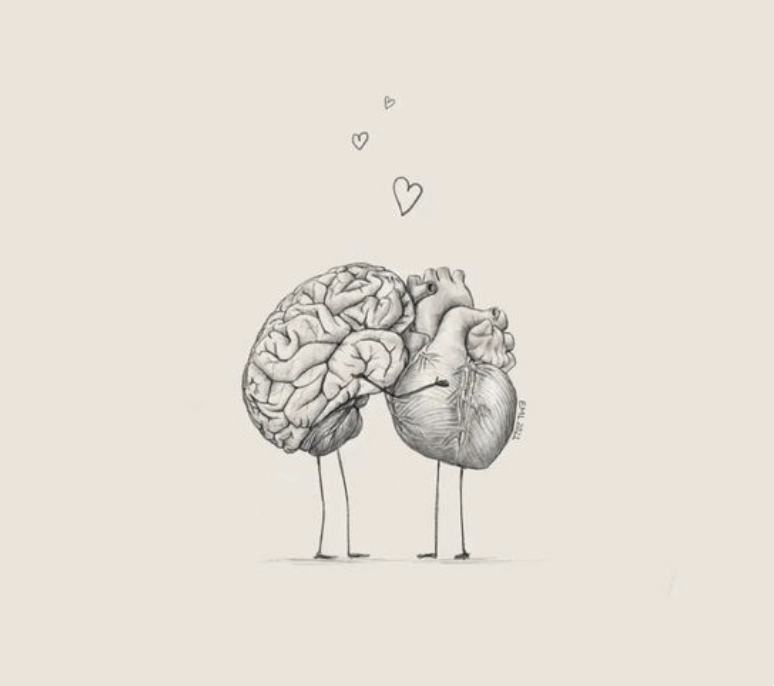
What’s fascinating is that this rhythm isn’t just calming, it brings the body into a state of coherence where your breath, heart, and brain are in a synchronized flow.
How to Practice Coherence Breathing
- Sit or lie down in a relaxed position.
- Inhale slowly through the nose for 5 seconds.
- Exhale slowly through the nose for 5 seconds.
- Repeat for 1–5 minutes.
- No need to force or perfect. Let it feel steady and easy.
Note: This practice is best done through the nose, if available, to support nitric oxide production and nervous system tone. If 5 seconds feels too long of a breath, start with 3 seconds inhale, 3 seconds exhale, then build up from there little by little.
Why I Teach This
I use this breath as a foundational tool with clients, in my workshops, and in my own life, especially in moments of stress, mental fog, or emotional overwhelm. When your breath slows, your body starts to listen, and when the body feels safe, everything shifts. We are not trying to hack our way out of discomfort, but instead build the capacity to be with what’s real, with more steadiness.
Want to Go Deeper?
Join me at Sault Haus for an in-person Breathwork Workshop.
We’ll explore coherence breathing, slow-flow breathing, conscious connected breathwork and other science-informed, body-based practices to regulate, release, and restore.
Open to all levels – come as you are
Hopewell, NJ | Click here to join
- Lehrer, P. M., & Gevirtz, R. (2014). Heart rate variability biofeedback: how and why does it work?. Frontiers in psychology, 5, 756. https://doi.org/10.3389/fpsyg.2014.00756 ↩︎
- Shaffer, F., & Meehan, Z. M. (2020). A Practical Guide to Resonance Frequency Assessment for Heart Rate Variability Biofeedback. Frontiers in neuroscience, 14, 570400. https://doi.org/10.3389/fnins.2020.570400 ↩︎
- Zaccaro, A., Piarulli, A., Laurino, M., Garbella, E., Menicucci, D., Neri, B., & Gemignani, A. (2018). How Breath-Control Can Change Your Life: A Systematic Review on Psycho-Physiological Correlates of Slow Breathing. Frontiers in human neuroscience, 12, 353. https://doi.org/10.3389/fnhum.2018.00353 ↩︎